CAPACITY
Read the watt-hours
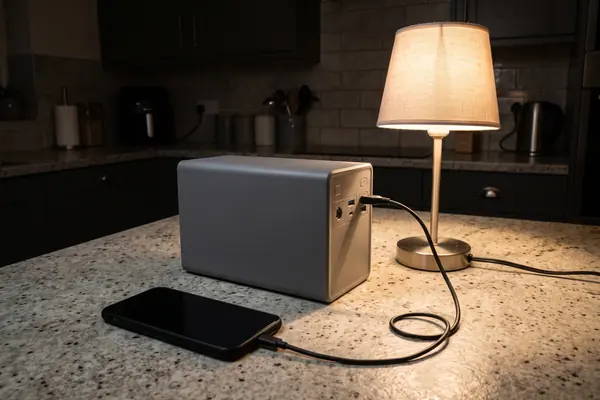
Battery size is energy, in watt-hours (Wh). If a label gives amp-hours instead, aviation regulators convert it as Ah × volts = Wh.
Size a kit sunnysideupsolarbackup
PORTABLE SOLAR, IN NUMBERS
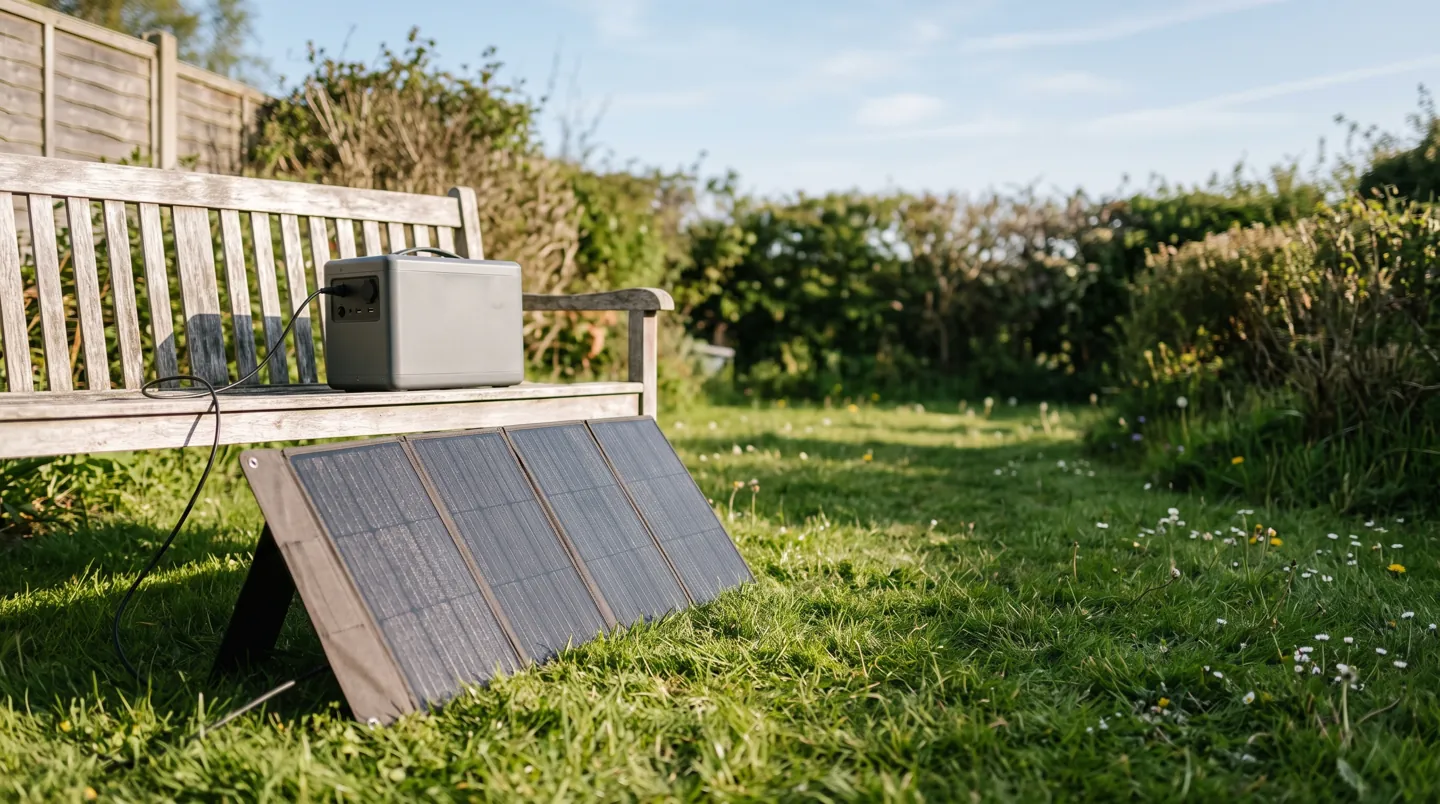
A folding panel and a battery box can keep the small things going.
How much they keep going depends on two numbers: the watt-hours stored in the box and the watt-hours the panel can actually gather from a British sky. This page puts real figures on both.
100 W is a peak, not a promise
Check a panelTHE SHORT ANSWER
What the box holds, and what the sky gives back.
Both are measured in watt-hours.
CAPACITY
Battery size is energy, in watt-hours (Wh). If a label gives amp-hours instead, aviation regulators convert it as Ah × volts = Wh.
Size a kitTHE PANEL
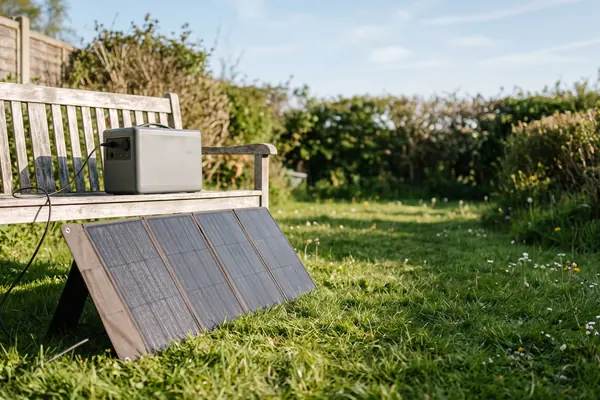
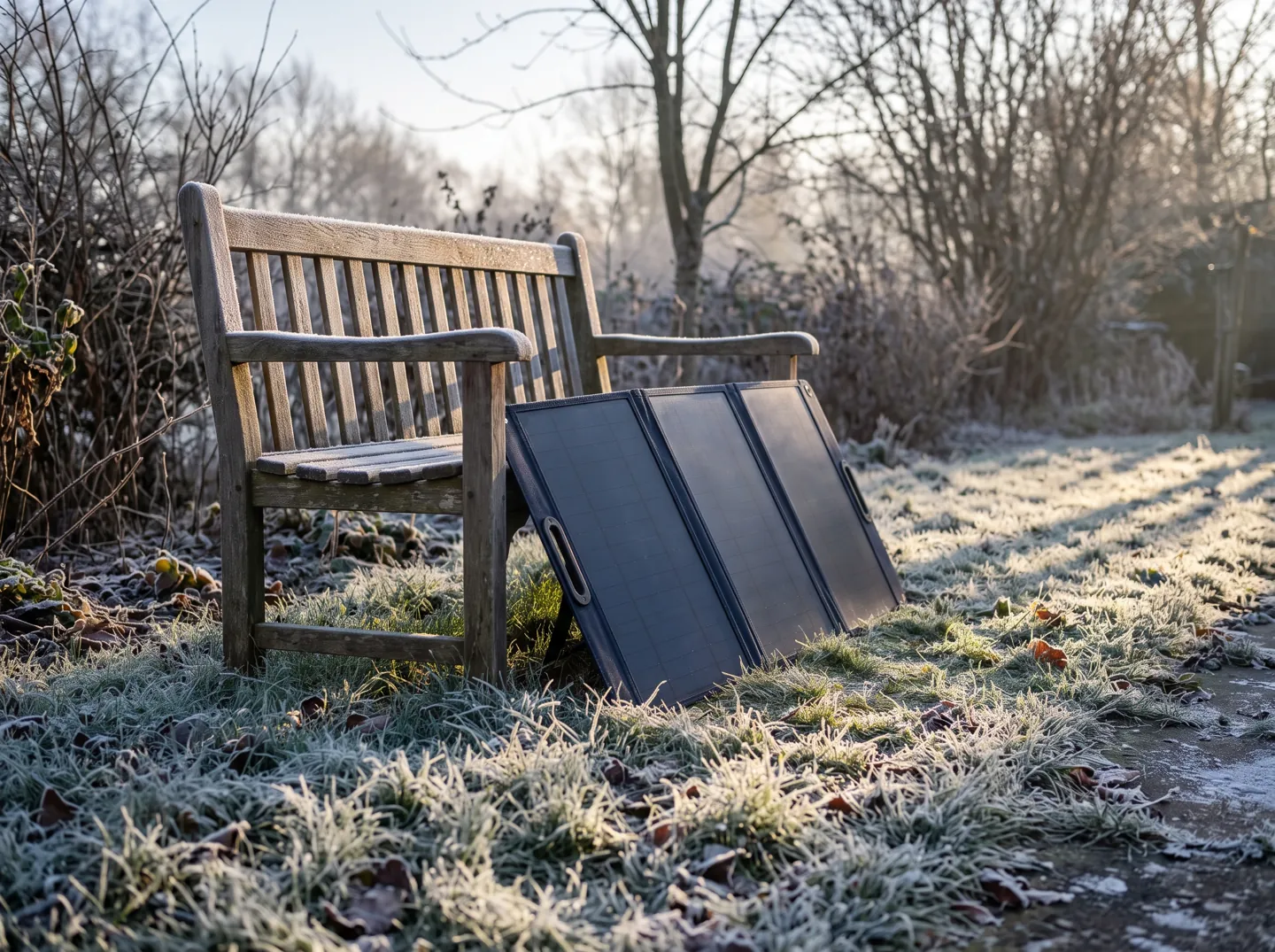
A panel's rating is what it makes in ideal conditions, the Energy Saving Trust explains. Real days are cloudier, lower and shorter.
Check a monthSEASONS
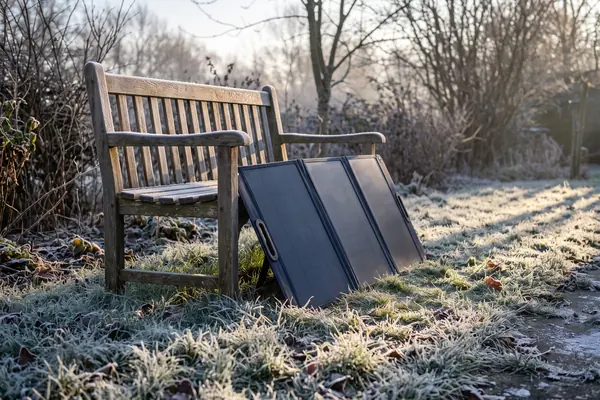
EU PVGIS data put a south-facing 100 W panel in London at about 410 Wh a day in June but only 120 Wh in December.
See the numbers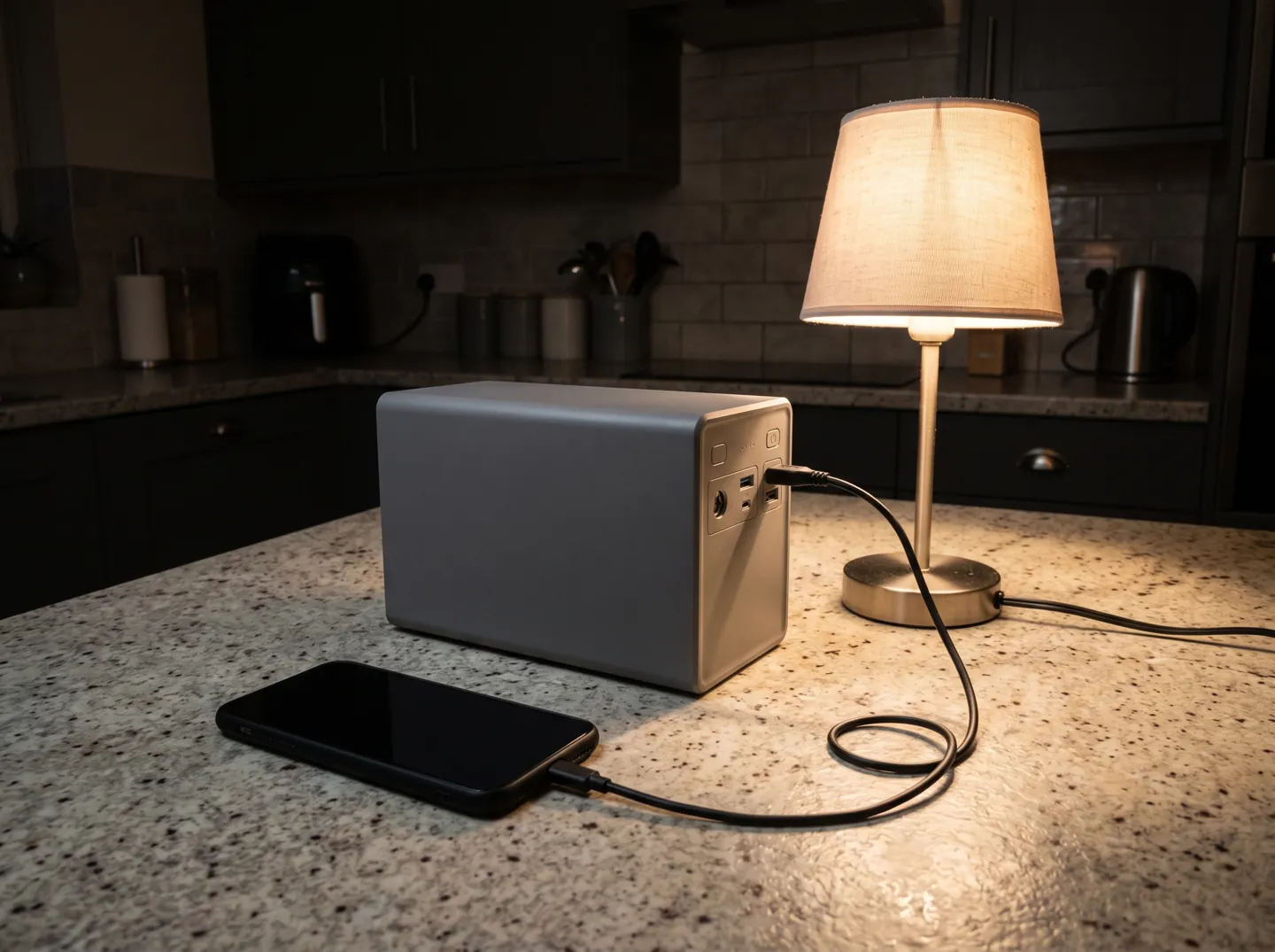
FOUR STEPS TO SIZE A KIT
None of this needs a calculator beyond multiplying. The aim is to match the box and the panel to the few things that matter in a power cut.
Phones, a lamp, a radio, a router. Note each item's watts and how many hours you would run it.
Watts × hours gives watt-hours. Add them up to see how big a battery the day needs.
Use the December figure to see how much a panel can put back on a dull day, not the June one.
The Energy Saving Trust says panels on a frame should avoid shade and face as close to south as possible.
TWO NUMBERS WORTH KNOWING
One London panel, two months.
Both figures are PVGIS averages.
≈ 410 Wh
100 W panel, London, average day
A fixed 100 W panel facing south at 35° averages about 0.41 kWh a day in June, the top month, in the EU's PVGIS model.
JUNE · PVGIS
≈ 120 Wh
Same panel, same place
The same panel averages about 0.12 kWh a day in December. Across a whole year PVGIS puts it at about 102 kWh.
DECEMBER · PVGIS
PVGIS assumes an unshaded panel fixed in place. A panel moved through the day to follow the sun can do better; one in shade or lying flat will usually do worse.
A QUICK PANEL CHECK
Pick a place and a month to see the average daily energy a fixed 100 W panel would make there. The bar shows how full a day of charging that is.
Averages from the EU's PVGIS tool (2005 to 2023 weather data) for a 100 W panel facing due south at 35°, with 14% system losses. Single days vary a lot.
CHARGING SAFELY
Portable power boxes use lithium-ion cells, the same family fire services warn about in e-bikes and phones. Essex County Fire and Rescue Service says they are safe in normal use but can catch fire if over-charged, short-circuited, soaked or damaged.
Fire service advice is to use the supplied charger, charge on a hard, flat surface while you are awake, keep batteries off your escape route and out of very hot or cold places, fit smoke alarms, and stop using any battery that is swollen, damaged or overheating.
Questions
Watt-hours, a measure of stored energy. If a battery is labelled in amp-hours, the Swiss aviation authority FOCA gives the conversion as amp-hours × voltage, or mAh × voltage ÷ 1,000.
Only in ideal conditions. The Energy Saving Trust describes the peak rating as the maximum a system can produce in ideal conditions. Panels still work on cloudy days, but produce less.
PVGIS puts a south-facing 100 W panel at about 120 Wh a day in London in December and about 70 Wh in Edinburgh, against about 410 Wh and 370 Wh in June.
Usually not if it is large. FOCA says lithium batteries and power banks over 160 Wh are not allowed in passenger baggage, and those between 100 and 160 Wh need the airline's approval. Check with your airline.
It can help with small loads. The government's Prepare guidance notes that a planned emergency rotation would cut areas off for around three hours at a time, and recommends torches, a battery or wind-up radio and the Priority Services Register.
Updated
ABOUT THIS NAME
sunnysideupsolarbackup.com is part of the DoodleSale portfolio. It isn't in an auction right now, but you can ask about leasing it.